
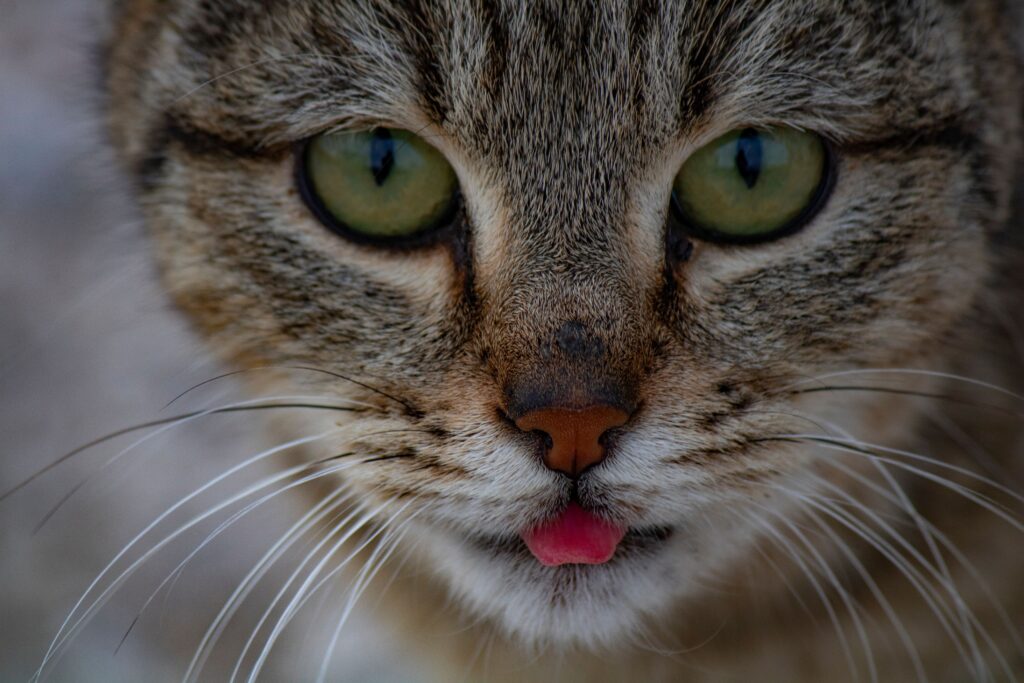
The rough tongue of your cat is a useful tool that plays an important role in its daily life both in how they use it to eat and for personal cleaning; its function in wilder contexts is to grab and separate the meat from the prey’s bone, and although domestic cats usually eat softer foods, it still remains an important evolutionary aspect for their daily life.

The tongue of a cat is covered with small spines that are oriented backward and are called papillae; these are responsible for giving it a rough texture to the touch. They are made of keratin, which is the hard protein found in human nails and hair.
When examined under a microscope, a complex structure can be seen that distributes the papillae in an orderly manner throughout the tongue, performing a function similar to that of a comb.
Functions performed by the cat's tongue
Relaxation:
In moments of stress your cat may choose to lick itself as a method of relaxation, stress in cats can be difficult to notice, so if you notice that it grooms itself more frequently in certain areas creating hairless patches, it is most likely that something is bothering it.
Cleaning and Brushing:
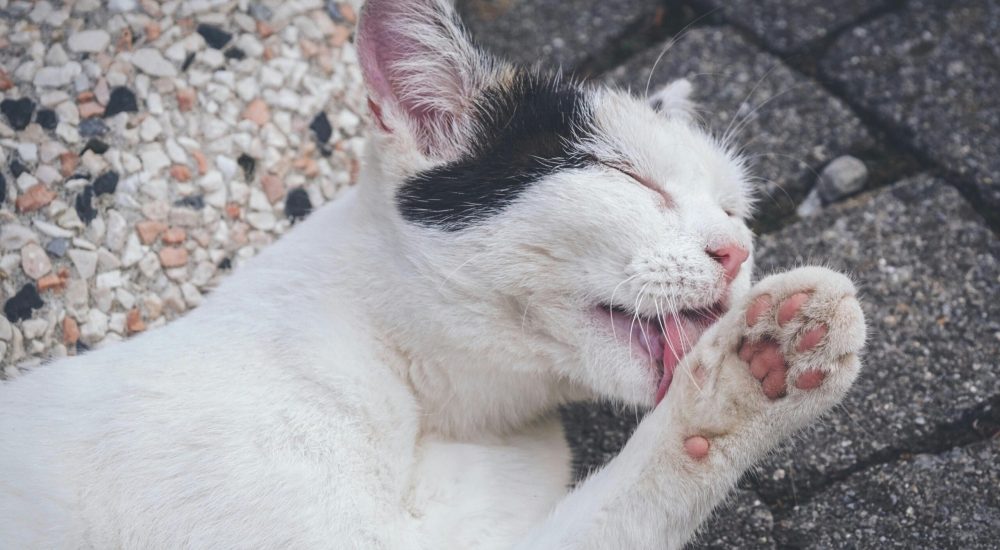
They use their tongue to clean their body several times a day with the goal of carrying with them the largest amount of dirt possible, while at the same time the papillae help distribute evenly the natural oils produced by the skin itself, which improve the shine and water resistance of the coat
Hunting:
The position of the keratin filaments on its tongue functions so that the prey gets trapped and cannot escape, being a bodily advantage for its hunting.
Cooling:
The spines found on the tongue are hollow and absorb saliva, which helps them spread it over their fur when cleaning, managing to maintain a cool temperature in hot places.

Your cat’s rough tongue is a vital tool for its daily life in aspects as important to it as its cleanliness. If you notice that at some point in its life its tongue or gums change color from pink to a pale pink, take it to a medical consultation, as this is usually the first sign of serious illnesses.