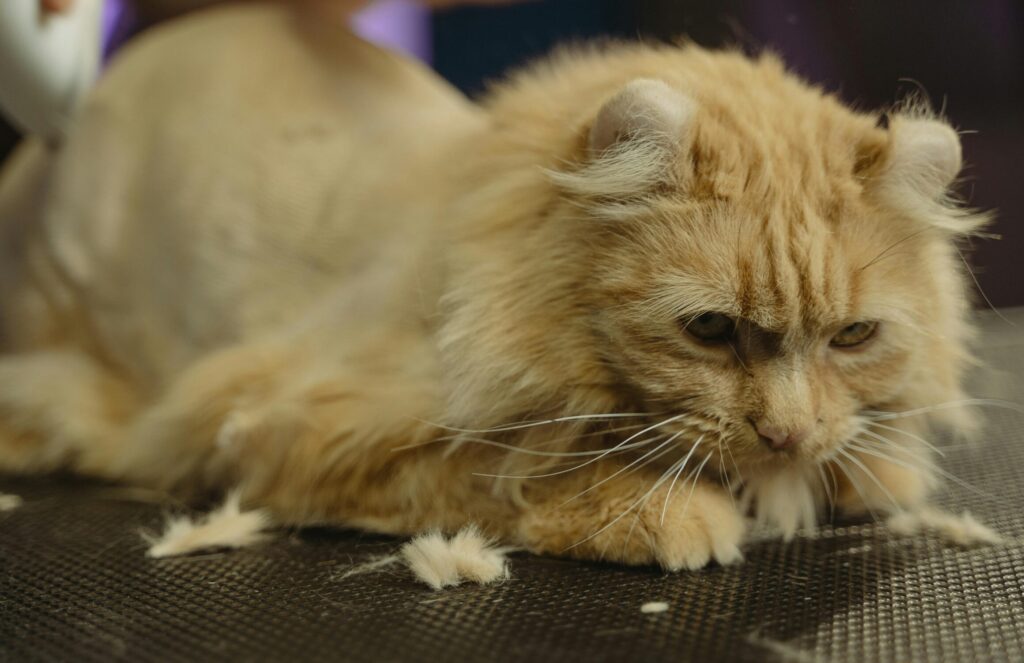
Hair loss in cats can be due to various factors such as anxiety, stress, hormonal changes, medications, or their diet, among many others. If you are new to having a cat, you should know that it is normal for them to leave a trail of hair on any surface, such as sofas, beds, or your shirts and carpets. Therefore, it is recommended to manage this hair loss with a brushing routine at least 3 times a week using a soft-bristled brush.
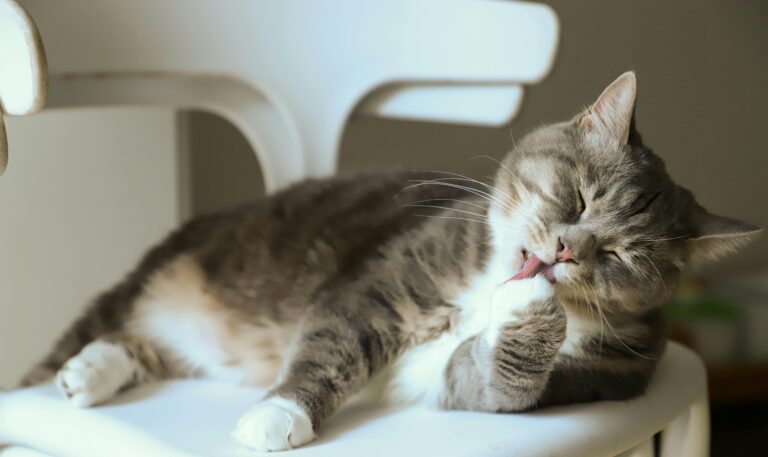
The problem begins when hair loss is abundant or leaves a hairless patch on your cat’s skin, as it could reflect health problems or stressful situations that lead it to excessively lick areas such as the belly and tail.
Another reason is advanced age, which leads them to lose more hair than in their youth. In these cases, it is recommended to take them to a veterinarian, who will recommend an improvement in the quality of their food.
Here we give you four reasons why your cat could be losing hair:
1. Hair loss due to anxiety and stress:
Cats are usually animals that love routine, so any disruption in it can lead to stress from situations that make them nervous, such as a sudden change of home, the loss of a close animal or person, or even the adaptation of a new cat in the house. All of this is reflected in their coat, which loses its shine and tends to fall out more easily; your cat may try to release its stress in different ways, and one of the most common is excessive licking focused on a specific area.
The best way to help stop this is by finding the reason why he feels nervous and helping him adapt in a better way, or you can even help him by buying a stress-relief collar which contains calming pheromones that will soothe him.
2. Hair loss due to hormonal changes:
There are hormones that control the three stages of hair growth in our cat’s coat, but these can be affected by hormones from the thyroid gland. Therefore, if your cat suffers from a disease such as hyperthyroidism, it can cause hair loss. Another hormonal reason can be the endocrine system, as it is responsible for secreting the hormones that your cat’s body may need.
For this reason, if there is a hormonal alteration, such as your cat being neutered, it can cause a malfunction in its proper functioning and lead to hair loss. It is recommended to go to a veterinarian to rule out any type of disease that may be causing it.
3. Hair loss due to parasites:
The possibility that hair loss is caused by parasites affecting your feline’s skin health is high since there are a variety of diseases such as ringworm, dermatitis, mange, fungi (for example: dermatophytes or Malassezia), and fleas; these diseases cause hair loss and redness in the area along with intense itching, so if you notice any of these symptoms, make sure to take your pet to the veterinarian.
4. Hair loss due to poor nutrition:
An unbalanced diet without adequate nutrients can cause your cat’s hair to fall out, especially considering that cats are carnivores that need to obtain these nutrients from somewhere. Therefore, a diet of both dry food (kibble) and wet food (pâté, pouches, and cans) is recommended, alternating between days. This will prevent their hair from becoming dull and brittle, and it will cover the need for vitamins, fats, and proteins that your cat’s body may require.